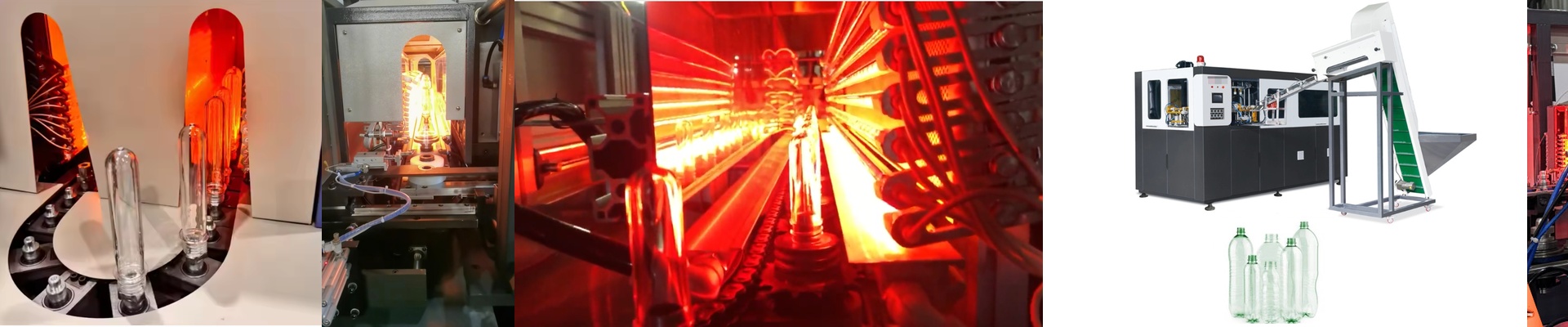
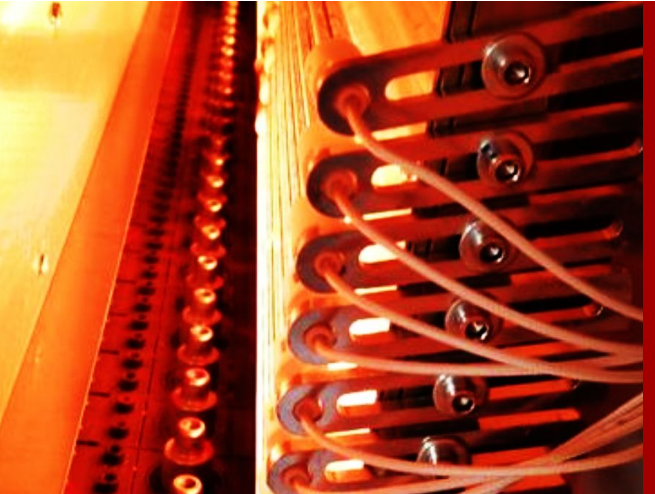
Out on the floor, a Krones blow molder is just sitting there, waiting on heat. Preforms hit the machine at the wrong temperature, the heating tunnel starts to drift, and suddenly you’re chasing rejects—thin walls, inconsistent stretch, or worse, a heater that jams up. Nobody needs another guessing game. You need a reheat module that keeps pace with the machine’s timing, follows its profile, and stays inside the tolerances. What actually matters, technically The Krones preform reheat module leans on short-wave infrared halogen emitters. They get to set temperature fast and recover quickly between shots, which is exactly what the cycle demands. We match emitter geometry and power density to the preform wall thickness and pitch, so the energy lands where it matters—shoulder and body—without scorching the neck finish. Output is tuned for a quick ramp and tight control. The module uses the same mounting, alignment, and wiring as the original, including the standard R7s lamp connections. Reflector geometry concentrates the pattern, so you waste less heat and keep the tunnel temperature even across the row. Why this works in stretch blow molding In stretch blow molding, repeatability is the only thing keeping OEE respectable. This module stabilizes preform temperature before the stretch, so thickness swings shrink and cycle-to-cycle variation drops off. The fast response shortens the heating window, which can shave seconds per cycle and cut down on gas pressure spikes. Energy use falls because the emitters deliver heat on demand, not full-time, and the focused pattern keeps losses low. Maintenance is simpler, too—lamp swaps are quick, and the build keeps heat away from nearby components, so you spend less time chasing thermal drift. The details you can’t skip Installation is straightforward, but it still comes down to the specifics. Confirm your machine voltage, connector type, and mounting dimensions. Expect a short warm-up and a recalibration after the first lamp change to lock the temperature profile in. Keep the reflectors clean—dust and bottle debris scatter the energy and force the control loop to work harder. Match emitter wattage to the preform material and color; heavy tints absorb differently and that shifts the heat balance.