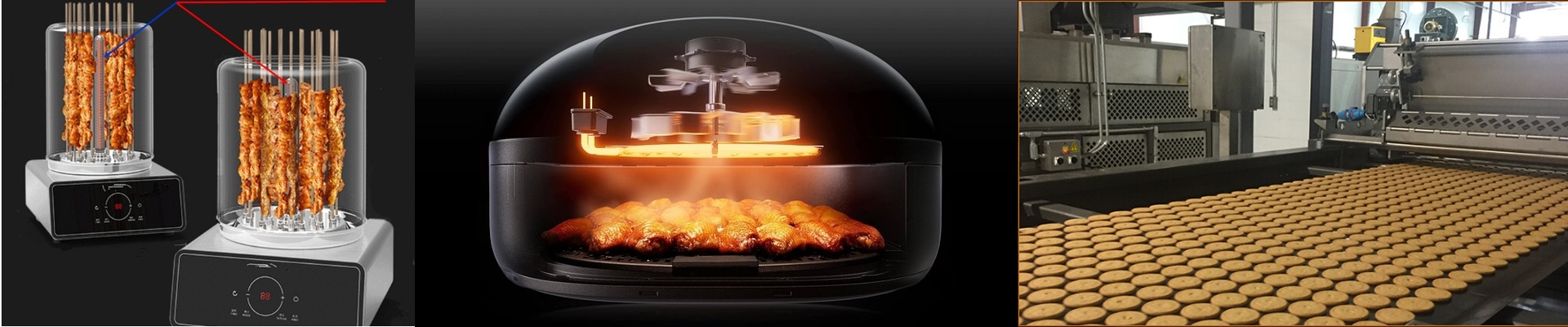
When service hits, you don’t have time to chase temperature. You need heat that snaps back, airflow that works with the product, and surfaces that take a daily beating and still clean up fast. That’s why a stainless steel convection oven built around an IR heater earns its keep in a production kitchen. You know the drill. Bake times drift. Crust color wanders. Pan after pan comes out uneven, and then you’re explaining to the front of house why the last order didn’t match the first. Convection helps, but if the heating element can’t recover fast enough when the door keeps opening and cold pans keep going in, the oven starts fighting you. Add an IR heater, and the timing of the bake changes—quick recovery, predictable hot spots, and a baking chamber that gets back to setpoint between batches.
What matters under the hood
A stainless convection oven with an IR heater isn’t just “a hot box with a fan.” It’s a heat-transfer tool, and the details decide whether it performs or just runs. We pair convection airflow with an infrared heating element built for rapid response and direct radiant transfer. In practice, that means the baking chamber heats fast on startup and recovers quickly after door openings, pan loading, and product changes. The payoff is shorter preheat, fewer temperature swings, and a more repeatable bake profile. The stainless exterior and interior aren’t cosmetic. They’re work surfaces. Stainless handles moisture, grease, and aggressive cleaning, and it doesn’t get that tired look that hides grime and makes sanitation a headache. On a busy line, cleanability is performance. Key engineering points that matter on the line:
- Fast heat-up and recovery: IR delivers immediate radiant heat, so the oven returns to temperature faster between loads. That keeps bake times consistent instead of creeping.
- Even heat distribution through controlled airflow: The convection fan moves heat where it needs to go, cutting down stratification and helping top- and bottom-loaded pans cook more evenly.
- Precise temperature control: A dependable thermostat and well-placed sensors hold the baking chamber at setpoint without overshoot. That matters when a delicate pastry needs a tight window and when bread needs predictable crust development.
- Built for the daily grind: Stainless construction means daily wipe-downs, hood exposure, and heavy use without worrying about rust, pitting, or finish breakdown. You’ll feel it in the numbers you can track: shorter preheat, more consistent pan-to-pan color, and fewer remakes.
Why this combo works under pressure
This oven is built for the reality of a service window—menu changes, pans coming nonstop, and a door that swings every minute.
Speed without giving up quality
IR heat shortens preheat and speeds recovery, so you can run more batches without cranking the heat. In a convection environment, that gives you faster throughput while still controlling crust, moisture, and caramelization. Faster doesn’t have to mean harsher when the control is tight.
Consistency across the load
When the oven is stable, your output stays stable. The mix of convection airflow and IR heating narrows the gap between the first pan in and the last pan out. That matters when you’re baking for a banquet, prepping a catering run, or trying to hit a consistent lunch window.
Energy use you can plan around
Shorter preheat and faster recovery cut down wasted heat. Instead of holding a big thermal mass at peak temperature during long idle periods, the system gets back to work when the next batch hits. Over a day, that can mean lower energy per bake cycle, especially during shoulder hours and staggered bakes.
Cleans the way a kitchen tool should
Grease, sugar, and starch build up fast. Stainless steel lets you scrape, spray, and sanitize without worrying about the finish. Keeping the oven clean isn’t a weekend project—it’s part of the shift.
The things you need to plan for
No single piece of equipment fits every corner of the kitchen. Here’s what to keep in mind, straight. **Clearance matters.**IR heaters put out intense radiant heat, and that heat needs room. We design for safe operation, but the oven still requires proper clearance to walls, hoods, and combustibles. Measure twice, then measure again. **Cookware and bakeware compatibility.**IR heat performs best when it can reach the product efficiently. Dark pans and stone hearths absorb radiant heat well and help deliver a strong crust. Highly reflective pans can reduce radiant absorption, so if your bakeware is very reflective, you may need to adjust rack position or bake time. **Installation and power.**This is commercial equipment, and it needs the right electrical supply, grounding, and ventilation. If your kitchen is tight, plan the delivery path and service access ahead of time. A dolly and a doorway are not the same as a planned install. **When it’s not the best fit.**If your operation relies on very long, very low-temperature proofing or slow drying, an IR-based convection oven may deliver more heat than you need. In those cases, a different configuration is the smarter call. Match the tool to the job. If your day is measured in batches, tickets, and the consistency of the last plate out the door, a stainless steel convection oven with an IR heater stops being a cost center and becomes a control point. Fast recovery, stable temperatures, and a chamber that cleans up quickly—those are the details that keep your bakes on schedule and your quality on brand.