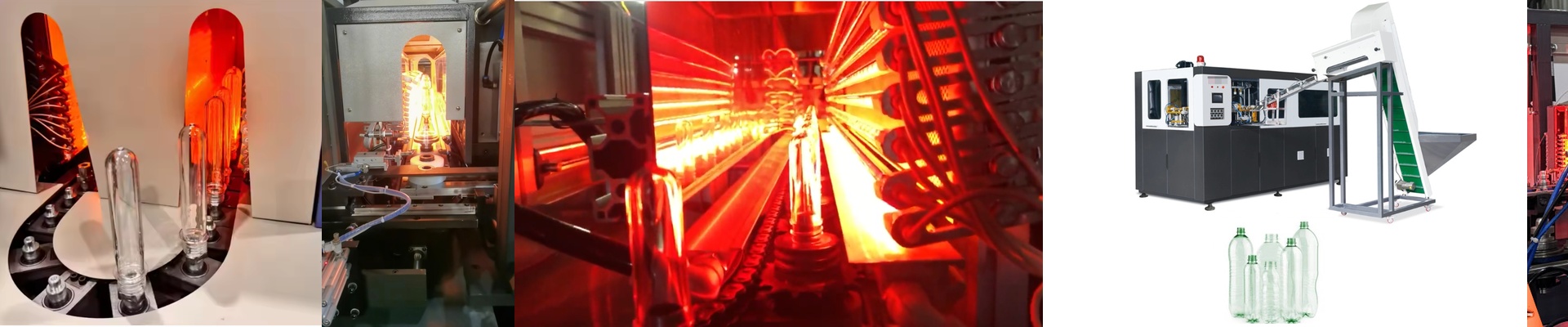
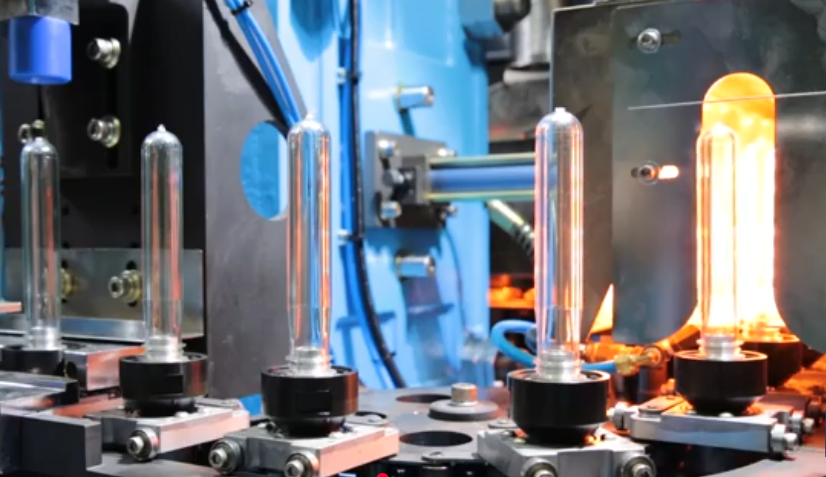
When the heating tunnel on your blow molder starts drifting, you don’t have time to play detective. You need an emitter that drops in and gets the thermal profile back where it should be—today. The Negri Bossi machine heater bulb is built as a straight 1:1 swap. It matches the wattage, voltage, length, and connector geometry used across Sidel, Krones, SIPA, Husky, SACMI, and Nissei ASB machines. What matters, technically We run short-wave halogen infrared emitters with quartz tubes—fast response, stable output. Typical ratings are 1.5–2.5 kW per lamp, with 230 V or 120 V options, and lengths sized to fit the usual heating zones. The connector end is done to the OEM standard—often R7s—so it seats clean without adapters. The tungsten filament placement is set to deliver repeatable hot-zone geometry across the preform wall, and the quartz envelope is chosen for high thermal shock resistance when you’re cycling continuously. Why this matters on the line On a blow molding line, heating is the bottleneck that drags everything else with it. A lamp that hits the original watt density restores the intended preform temperature spread. That means less crystallinity trouble, better bottle weight consistency, and stretch ratios that stay stable. In practice, you see fewer rejects, less scrap, and changeovers that behave predictably. Because the emitter matches the OEM thermal footprint, you don’t have to retune the whole tunnel to make up for one weak link. A few shop-floor notes Installation is straightforward, but alignment is not optional. Check the lamp position relative to the reflector and the preform path—even a small offset moves the hot spot and gives you uneven heating. Make sure the reflector is clean and not oxidized. No emitter can do its job behind a dirty reflector. Plan replacements at the start of a scheduled run, and keep spares on the shelf. One practical reminder: these emitters run hot, so let them cool before handling and use the right protective gear.