Getting the Crust Right: Why SWIR Matters
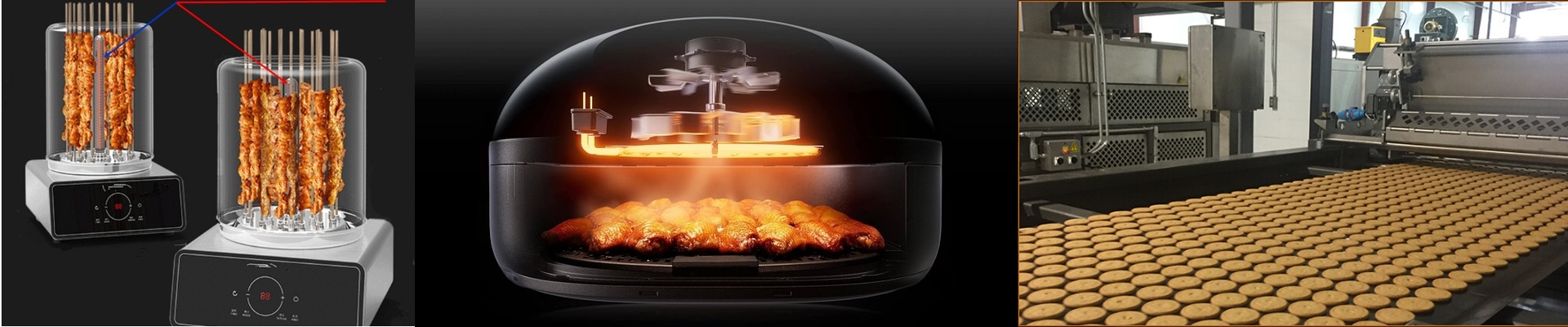
In a commercial bakery, a single degree is the difference between a perfect golden crust and a burnt mess. It’s a tight window. That’s why we use Short Wave Infrared (SWIR) lamps. Most ovens just heat up the air and hope for the best, but SWIR is different. It sends energy straight into the dough. It’s direct. It’s precise. And it’s the only way to get that same perfect loaf every single time.
Why go with Short Wave Infrared?
Standard heating elements are sluggish. They take forever to warm up and even longer to cool down. It’s like trying to steer a ship—you turn the wheel, but the boat takes a while to actually move. SWIR lamps—the kind with halogen-filled quartz tubes—are the opposite. They hit full power almost instantly. The second your controller cuts the power, the heat stops. Just like that. No “coasting” into an over-baked loaf. We use high-purity quartz because these lamps go through a lot of thermal shock. They’re constantly clicking on and off. Plus, the halogen cycle keeps the inside of the tube clean so the glass doesn’t darken over time. You get steady, reliable heat for thousands of hours without the performance dipping.
The Nitty-Gritty on Setup
Most of these lamps use R7s or SK15 connectors. They’re snug and don’t wiggle, which is exactly what you want in a vibrating kitchen environment. When it comes to wattage, you’ve got to match it to the size of your oven. If you crank up the wattage per centimeter, you get more heat density. This speeds up the browning (the Maillard reaction, for the science buffs), but be careful. Too much, and you’ll put way too much stress on the quartz glass. Also, make sure your PID controller is tuned for speed. If the switching is too slow, you’ll get temperature ripples. You want a smooth ride, not a rollercoaster.
The Trade-offs
Here is the catch: these lamps get incredibly hot at the filament. While the bread is getting the radiation it needs, the sockets and wiring are sitting in a heat bath. Don’t skimp on the ventilation around the housing. If those sockets overheat, the contacts oxidize and burn out. It’s a frustrating way to kill a perfectly good lamp, but it happens all the time when people ignore the airflow.