
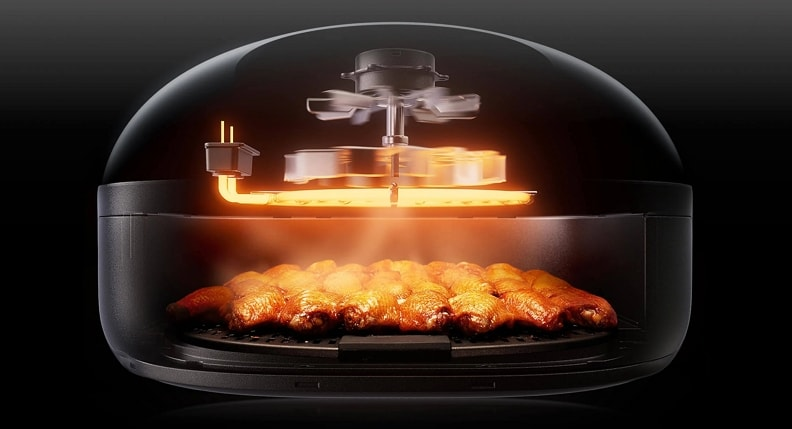
Finding the Right 300W Infrared Lamps for Your Oven
Let’s be honest: when you’re looking for replacement lamps for an imported convection oven, you’re usually stuck between two choices. You either pay the “brand name tax” for OEM parts, or you hunt for a cheaper alternative and pray it actually works. But here’s the thing. You aren’t just swapping out a lightbulb. You’re trying to match a specific heat profile. Getting the power right That 300W rating? That’s all about how fast and hard the heat hits. In a convection oven, that lamp is teammates with the forced air to keep everything heating evenly. If you go too low on the wattage, you’ll notice your ramp-up time dragging. It’s frustrating. But if you push it too high, you’re asking for trouble—you could fry the filament or even melt the internal wiring. And please, double-check your voltage. If you plug a 220V lamp into a 110V circuit (or the other way around), it’s usually a very short trip to a dead bulb. The “Fit” Factor We use high-purity quartz glass for these tubes. Why? Because quartz doesn’t freak out when the temperature jumps up and down rapidly. It handles the shock. Most of these 300W lamps use R7s or similar snap-in connectors. These are great because they just click into place. No rewiring, no headache. But watch the length. Seriously. Even a 2mm difference can keep the lamp from seating properly in the socket. That creates a tiny air gap, and that’s when you start seeing sparks—or “arcing”—at the terminals. Not a great look. The real cost of “Cheap” Here is the trade-off. The budget-friendly options usually use lower-grade tungsten filaments. On day one, they’ll feel exactly like the expensive ones. They put out 300W, they glow red, they get the job done. But they wear out faster. The filament thins out, and suddenly you’re replacing the bulb again. You save a few bucks upfront, but you spend more time dealing with maintenance shutdowns. If you go this route, just make sure your techs have a stack of spares on the shelf. It beats having your whole production line grind to a halt because of one burnt-out tube.