
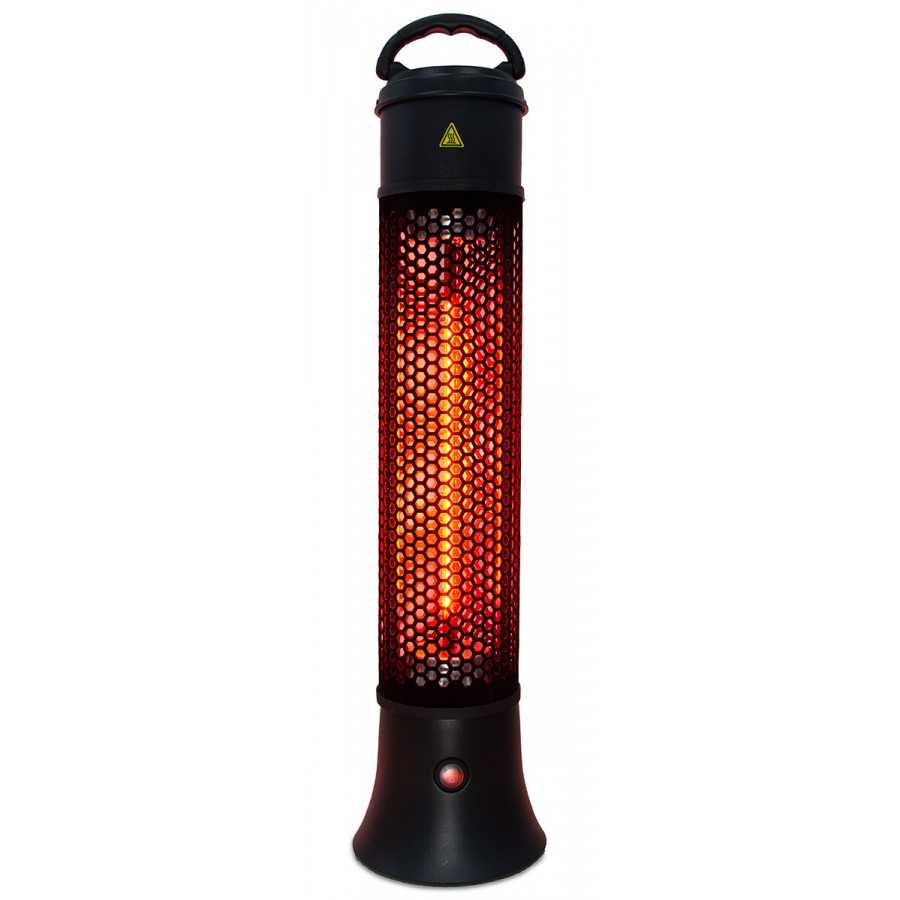
Why We Use Explosion-Proof Quartz in Bathroom Heaters
Think about your bathroom. It’s a place of steam, splashing water, and—if you’re using a radiant heater—intense heat. Here is the problem: you’ve got a quartz tube glowing at 800°C, and then a stray drop of cold water hits it. That sudden temperature crash creates a massive amount of tension. In a standard tube, that’s a recipe for a shatter. Nobody wants a shower that ends with exploding glass. That’s why we use explosion-proof quartz. It’s all about the safety net. Now, quartz is already pretty good at handling heat, but it isn’t bulletproof. To fix the “shatter” problem, we wrap the tube in a specialized protective layer—think of it as a high-temp polymer sleeve. If the inner tube ever does crack, this layer catches the shards. It keeps the glass contained and, more importantly, keeps the live electricity away from the water. It turns a potential disaster into a simple part failure. Warmth that actually hits you We use short-wave infrared tech here. Instead of trying to warm up all the air in the room (which takes forever), the energy travels as radiation. It hits you directly. It’s instant. You flip the switch, and you feel the heat immediately. To make sure these last, we use heavy-duty filaments. We know these heaters get clicked on and off constantly, and we don’t want them burning out after a few months. But there is a catch. You have to be careful with the wattage. If you push too much power into a tube without enough airflow, you’ll cook the protective coating right off. It’s a balancing act. Getting the install right These are designed to drop right into ceiling fixtures, but the details matter. The seals have to be tight. If there’s even a tiny gap, steam will sneak in and start eating away at the electrical terminals. That leads to corrosion, and eventually, a short circuit. And please, check your wiring. If the wires are too thin for the current, they’ll heat up. You don’t want your insulation melting in the ceiling before the lamp even gets warm.