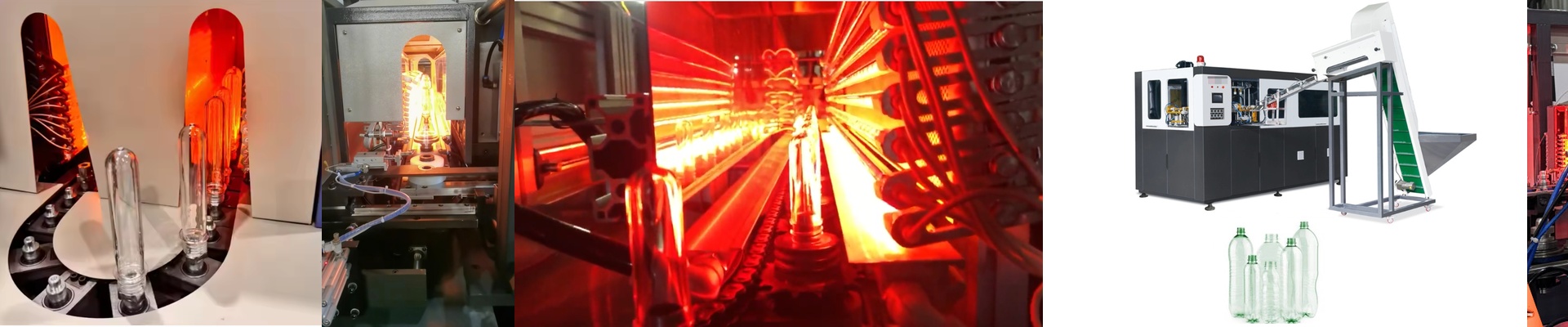
Can a simple lamp swap actually get you more bottles?
If you’re running a mid-sized PET operation with some older machines, you know the frustration. You want to push the cycle times faster, but the equipment just won’t budge. Before you go spending a fortune on a brand-new machine, take a look at your heating oven. That’s usually where the real bottleneck is. When your preforms aren’t hitting the right temperature consistently, you end up fighting uneven walls and tossing a lot of wasted plastic into the scrap bin. It’s a headache. The secret is in the heat density. Think of it this way: swapping out standard quartz for high-density halogen tubes is like upgrading from a candle to a blowtorch. A 2500W tube just dumps heat into the plastic way faster than a 1500W one does. Because the heat transfer is so much more aggressive, you can actually speed up your conveyor without worrying about under-heating the preforms. You get a shorter heat-up zone and, more importantly, a faster cycle. The “drop-in” part We didn’t want you to have to rewire your entire cabinet just to get a bit more speed. That’s why we designed these as drop-in replacements. Most of our units use R7s or Sk15 connectors, so they just slide right into your existing sockets. We also use heavy-wall quartz glass. Why? Because high heat makes cheap glass bow, and that ruins everything. Plus, some of our versions have a special coating. Instead of just scorching the surface of the plastic, this coating shifts the wavelength so the heat actually sinks deep into the PET. But here’s the catch… More power isn’t a magic button. You have to be careful. If you put a 400V high-output lamp into a machine built for 220V, you’re going to trip your breakers or fry your transformers. Not a good day. And remember, more heat in the oven means it gets hotter around the blow molds. You’ve got to make sure your cooling water is flowing fast enough to strip that extra heat away. If you don’t, your bottles might come out deformed. Just match your voltage, double-check your cooling, and swap the lamps. It’s a simple move that lets an old machine act like a new one.